

Someday We’ll Find It, The Rainbow Connection: Returning Us Home to Each Other

Every night, Mom tucked me in tight and read me a bedtime story, often my favorite, the adventures of Christopher Robin. Recently, I’ve begun to see this story in a new light.
It opens with sadness: Christopher Robin, a boy alone in his room, his parents away. Then, all on his own, he does an incredible thing. He dreams up the world he longs to be part of: a Hundred Acre Wood filled with stuffed animals come to life, including Pooh, Piglet, Rabbit, Tigger, and Eeyore among the kind-hearted crew. Not much happens in the wood, mostly small things, pulling Pooh out when he gets stuck in Rabbit’s hole, finding Eeyore’s tail and pinning it back on, everyone sharing snacks around a picnic table. But through those small, seemingly inconsequential moments, something triumphant happens: Christopher Robin and his small band become a village, a group of beings who belong to each other.
A few years after those bedtime stories, in a small-town movie theatre, I met another dreamer, this one green, sitting alone on a log in a swamp, strumming his banjo and singing “Rainbow Connection”:
Why are there so many songs about rainbows
And what's on the other side?
Kermit the Frog was giving voice to a longing he couldn’t quite name, something just out of sight, dismissed by others:
Rainbows are visions, but only illusions
And rainbows have nothing to hide
So we've been told, and some choose to believe it
I know they're wrong, wait and see
He knows: his longing is pointing him toward something real, and he sets out to find it. As he travels, he gathers a ragtag crew of fellow Muppets, and by the film’s end he discovers they are what he’s been searching for all along. Together, they finish his song:
Someday we'll find it, the rainbow connection
The lovers, the dreamers, and me
For Kermit and his friends, someday is today: they’ve found the rainbow connection in each other.
This, I believe, is the greatest of returns: not individual glory (a pot of gold, a crown, or anything else modern culture insists is precious), but coming home to connection, to mutuality, and to the remembrance that I belong to you and you belong to me and we belong to each other.
This return has become my life’s work: helping people understand how two million years of village life wired our minds for belonging; how we arrive today in a world without villages, met by two busy, weary parents attempting to do the impossible (accomplish alone what an entire village once shared); how consumer culture exploits our unmet childhood longing for each other to hook us on its forces of acquiring and achieving; and how the road back home to each other is paved by gentler forces: stillness and compassion.
This, I believe, is the greatest of returns...coming home to connection, to mutuality, and to the remembrance that I belong to you and you belong to me and we belong to each other.
A question, a hospital room, and a village within
I was telling all of this (Christopher Robin, Kermit, the greatest of returns, my life’s work) to my friends from Slovenia, who had finally come to visit. As they listened, nodding, Maša, the bravest among them, piped up: I think this is as much about you as it is about things bigger than you.
I admit I was hurt, because surely (I mean, who would doubt it?) my work to bring belonging back to our world was fueled by pure altruism, by a heartfelt desire to rescue us all from isolation. It wasn’t about me…was it? As much as I wanted to brush Maša’s comment aside, to dismiss it as mere misunderstanding, it stuck with me.
As Kermit, sitting on his log, once sang:
Have you been half asleep, and have you heard voices?
I've heard them calling my name
I've heard it too many times to ignore it
It's something that I'm supposed to be
Or, as Joseph Campbell wrote, sometimes “the world may have to come and get him” (The Hero with a Thousand Faces, 178). Through Maša’s words, the world was coming to get me. And the world was about to come get me again…
The next morning, I got a call from Mom. She was in the hospital again with complications from her stage 4 lung cancer, and this time she needed help getting out, because the doctors didn’t feel safe releasing her. A flight and a drive later, I was at Mom’s bedside, surprised to find that what she most wanted to talk about was the 89-year-old man who’d been wheeled into the bed beside hers. He was a recent immigrant from a country near the one she’d left fifty-five years earlier. His family kept arriving at all hours…sons, daughters, grandchildren, coming by the handful, filling the room with voices and laughter and the smells of food from home, staying far too late, speaking far too loudly.
Mom wasn’t complaining. She wanted me to know she didn’t mind, not one bit, because his family did more than keep her company. They brought back the sensory world of the family village she had grown up in: a large extended family sharing an apartment building, she the youngest among them, the gleam in her father’s eye.
Mom had seldom spoken to me about what she’d left behind when she immigrated to Canada, her young life wrapped in easy togetherness. And she rarely mentioned the emptiness she felt in its absence.
But now, as she talked, with Maša’s question still echoing, I saw something I’d been trained to recognize as a therapist: Mom’s grief, and her joy too, had passed silently from her to me, an unspoken intergenerational transmission from parent to child. I had inherited both her love for her village and her sorrow for its loss.
What’s more, I had lived in a family village of sorts for my first three years, so the village was mine too, lost from conscious memory, but encoded in me as a living, felt template. Joseph Campbell’s words again rang true: “Where we had thought to travel outward, we will come to the center of our own existence” (Hero, 18).
A last goodbye and a lantern for the return home
A few days later, Mom is released from hospital, and I’m home with her now. She’s dying. She’s afraid of death, imagining it as the final separation from the people she loves most, me among them. I reassure her, telling her death isn’t what she fears, but its opposite, a return to the largest village of all, a homecoming to the place she’d just remembered so fondly…only bigger this time, and brighter.
Not long after, Mom takes her last breath, and as she crosses over with me holding her hand, she leaves me with a parting gift. The closest I can come to describing it is a hug from the inside, beginning in my heart and radiating outward, carrying such a rush of warmth and joy that I can’t help but smile, arriving with a certainty that everything is more than okay, that she is home in the village once more.
Someday, each of us will arrive at that largest village of all, but long before then, let’s travel to another village, just as important, one we reach by taking what I call our greatest hero’s journey: walking hand in hand with the gentle forces of stillness and compassion, building cultures of belonging and shared ways of living, and coming home to each other. I want this for the world because I believe in it, and like Kermit, I trust we’ll find it:
Someday we’ll find it, the rainbow connection
The lovers, the dreamers, and me
And, yes, I want it for myself too, because for me, this is also, in Campbell’s words, a journey inward, “into the depths where … long lost, forgotten powers are revived” (Hero, 22).
MythBlast authored by:

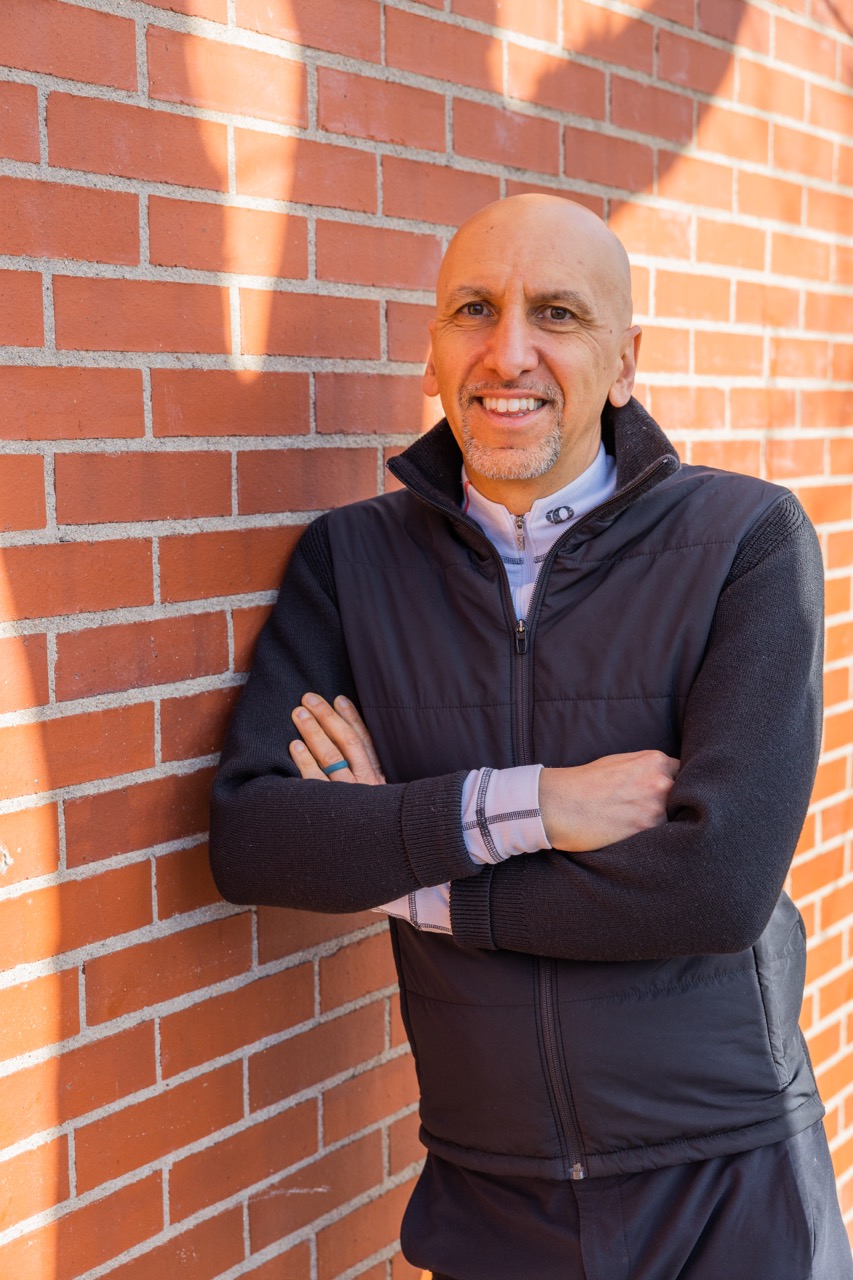
Carl R. Nassar, PhD, CIIPTS, is a writer, researcher, clinical trainer, former university professor, and psychotherapist. His writing is part-science, part-story, exploring what both research and lived experience have taught him… that our sweetest ending is not individual triumph, but reunion, a return to connection, kinship, and the village. Carl lives in Colorado with his wife, Gretchen, and their daughter, Kaila. www.carlnassar.com

This MythBlast was inspired by the Return stage of the hero's journey and The Hero with a Thousand Faces.
Now Streaming on Spotify—Explore the MythBlast Playlist
Latest Podcast

In this episode of Pathways with Joseph Campbell, we return to 1971 and the Mann Ranch in Northern California, where Joseph Campbell explores the spiritual disciplines that shape our understanding of ourselves and the world. Drawing on the insights of Carl Jung, James Joyce, Thomas Mann, and Eastern spiritual traditions, Campbell examines science and art as disciplines of self-transcendence. He explores how scientific inquiry requires openness to the unknown, how art can move us beyond desire and judgment, and how the wisdom of Eastern traditions invites us to look beyond the ego. Throughout the lecture, Campbell returns to the tension between perfection and completeness, revealing how our imperfections, our capacity for compassion, and our willingness to embrace life's contradictions can open us to a deeper experience of being alive. Following the lecture, host Bradley Olson offers reflections on Campbell's ideas and their continuing relevance.
This Week's Highlights

"The passage of the mythological hero may be over-ground, incidentally; fundamentally it is inward––into depths where obscure resistances are overcome, and long lost, forgotten powers are revivified, to be made available for the transfiguration of the world."
-- Joseph Campbell


